
Q’eswachaka – The last Inca grass bridge
Description
Some traditions survive in books and museums. Others continue to be woven, rebuilt, and passed from one generation to the next. Q’eswachaka is one of them. Suspended above the Apurímac River, this remarkable grass bridge represents a living tradition that connects present-day Andean communities with an ancient Inca practice.
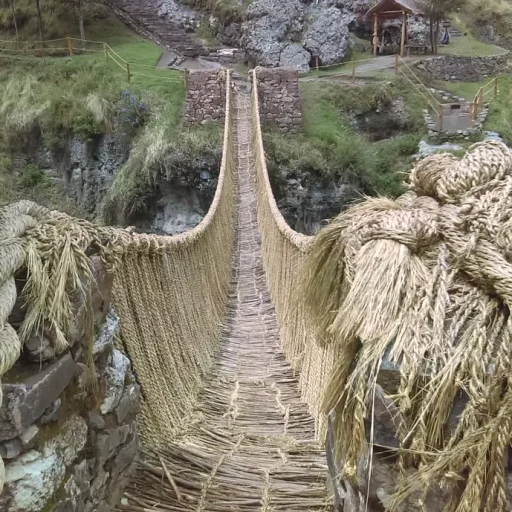
Made entirely from ichu, a native Andean grass, the bridge is traditionally renewed every year by local communities using techniques passed down through generations. More than an impressive engineering achievement, Q’eswachaka reflects the importance of cooperation, community identity, and ancestral knowledge in the Andes.
This experience takes us beyond the most visited attractions of Cusco, allowing us to discover a remarkable example of living cultural heritage while traveling through the spectacular landscapes of the southern Andes.
Itinerary
- Cusco – The Journey Begins: Our experience begins with an early departure from Cusco, traveling south through the Andean highlands toward the province of Canas.
- As we leave the city behind, the landscape gradually changes into vast valleys, agricultural fields, traditional communities, and high-altitude plains.
- Along the route, we will have the opportunity to appreciate the changing scenery and observe the traditional way of life of communities that continue to maintain strong connections with their ancestral environment.
- Four Communities – A Tradition Built Together: Before reaching Q’eswachaka, we will learn about the communities responsible for preserving this remarkable tradition.
- The annual renewal of the bridge involves the participation of four Quechua communities: Huinchiri, Chaupibanda, Choccayhua, and Ccollana Quehue.
- Their collaboration demonstrates the importance of ayni, an ancestral Andean principle based on mutual assistance and collective work.
- Q’eswachaka – The Living Inca Bridge: We will finally arrive at Q’eswachaka, the traditional grass bridge suspended above the Apurímac River.
- The bridge is made from q'oya or ichu, a type of native grass that is dried, twisted, and braided by hand to create strong ropes. These ropes are then woven together to form the bridge.
- The annual renewal is a collective process in which community members work together to dismantle the old bridge and construct a new one using ancestral techniques.
- During our visit, we will learn about the construction process, the history of the bridge, and its importance to the communities that have preserved this tradition for centuries.
- The Apurímac River – An Andean Landscape: From the surrounding viewpoints, we will appreciate the impressive landscape formed by the Apurímac River and the mountains of southern Cusco.
- The dramatic canyon and the traditional bridge create a unique setting that highlights the relationship between human ingenuity and the Andean environment.
- We will have time to explore the area, take photographs, and appreciate the cultural significance of this remarkable place.
- Return to Cusco: After completing our visit, we will begin our return journey through the southern highlands.
- We will make a stop along the route for lunch before continuing toward Cusco.
- We will arrive in the city in the afternoon or evening, depending on road and weather conditions, concluding a journey that offers a different perspective on the living heritage of the Andes.
Includes
- Tourist transportation from Cusco and back.
- Professional bilingual tour guide (Spanish and English).
- Breakfast.
- Lunch.
- Entrance fee to Q’eswachaka.
- Permanent assistance throughout the tour
Does not include
- Personal expenses.
- Gratuities.
- Additional services not mentioned in the itinerary.
Recommendations
- Tourist transportation from Cusco and back.
- Professional bilingual tour guide (Spanish and English).
- Breakfast.
- Lunch.
- Entrance fee to Q’eswachaka.
- Permanent assistance throughout the tour
Reserva Ahora
$ 350.00